Ecology is not austerity.
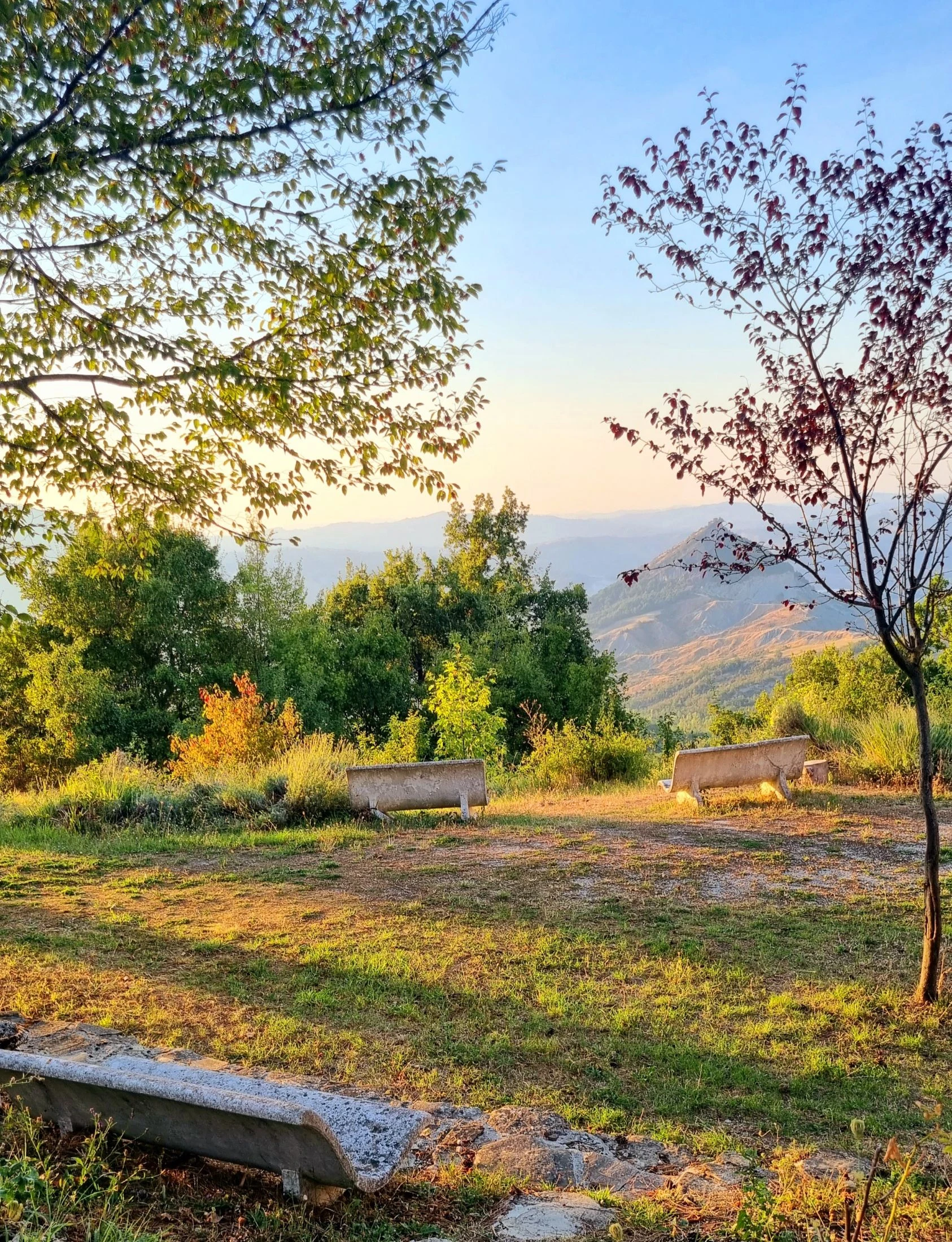
 Maiolo · a perpetual presence
The philosophy
Honeydew’s motto is ‘Ecology in Community’. We believe that our stewardship of the earth depends on collective solidarity - on relearning how to coexist in social as well as biological ecosystems.
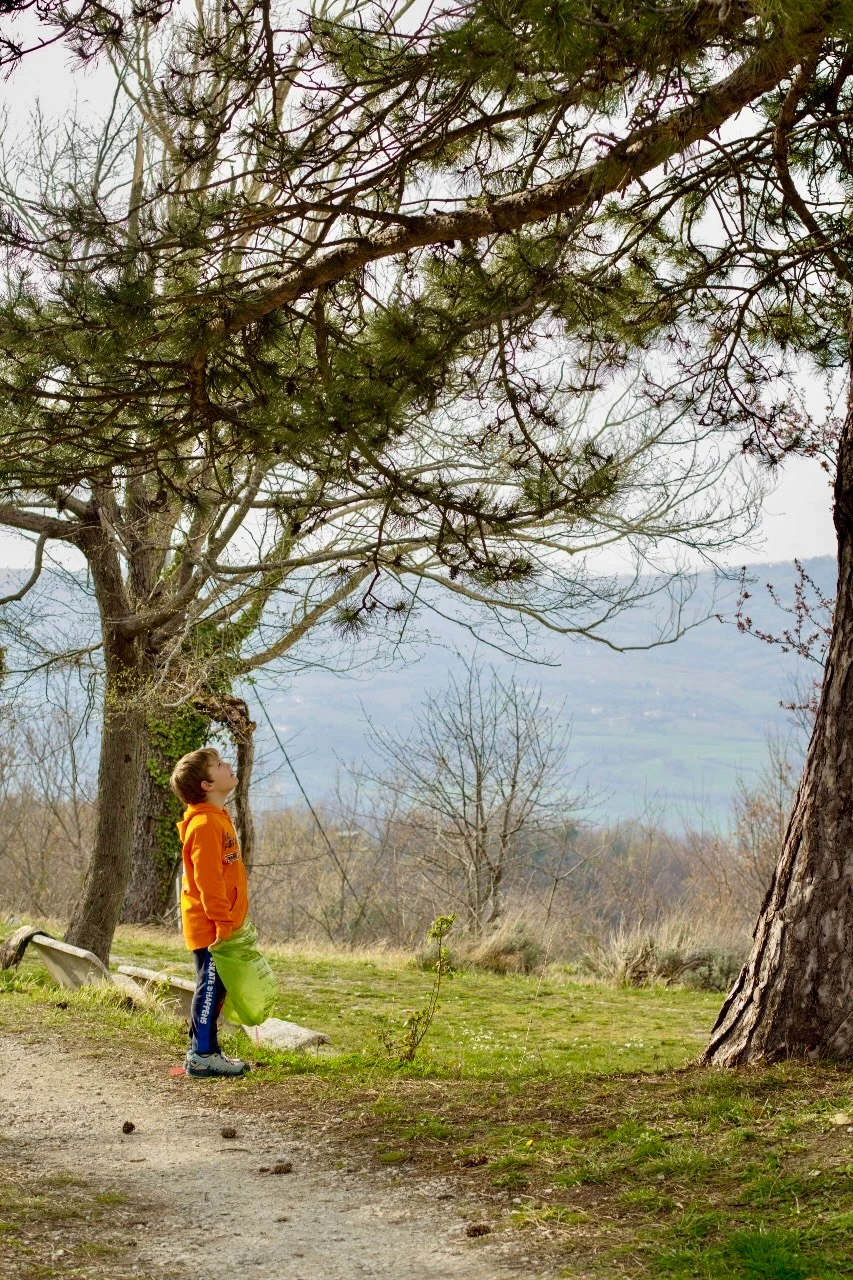
This involves a shift in awareness, an awakening to the natural world as a perpetual presence, not an occasional encounter. Western solutions to the climate crisis often reflect the individualistic ethos that caused it - emphasising ‘better’ forms of consumption. Instead, we regard our community as a living organism, integral to the environment that nurtures it. We cannot reconnect consciously with the earth without reconnecting consciously with each other. Only by transforming how we perceive the world can we hope to repair our relationship with it.
The Honeydew approach to ecology is regenerative, not merely sustainable. Sustainability asks: how do we slow the damage? Regeneration asks: how do we leave things better than we found them? The soil, the trees, the bees, the water, the buildings - everything at Maiolo is tended with the aim of improvement, not just preservation.
Two commitments
What we are working toward.
All Honeydew communities commit to two key goals for sustainability:
Within five years
To be agriculturally self-sufficient within five years.
Ecologically and economically - as well as for culinary and health reasons - becoming self-sufficient for fruit and vegetables is an essential aim. This does not mean purchasing from our neighbours is prohibited; simply that we are able to sustain ourselves if necessary, especially in moments of adversity.
Within five years
To achieve energy independence within five years.
Community powered by renewable energy is not an aspiration - it is a target we are actively working toward.
The land
What grows here.
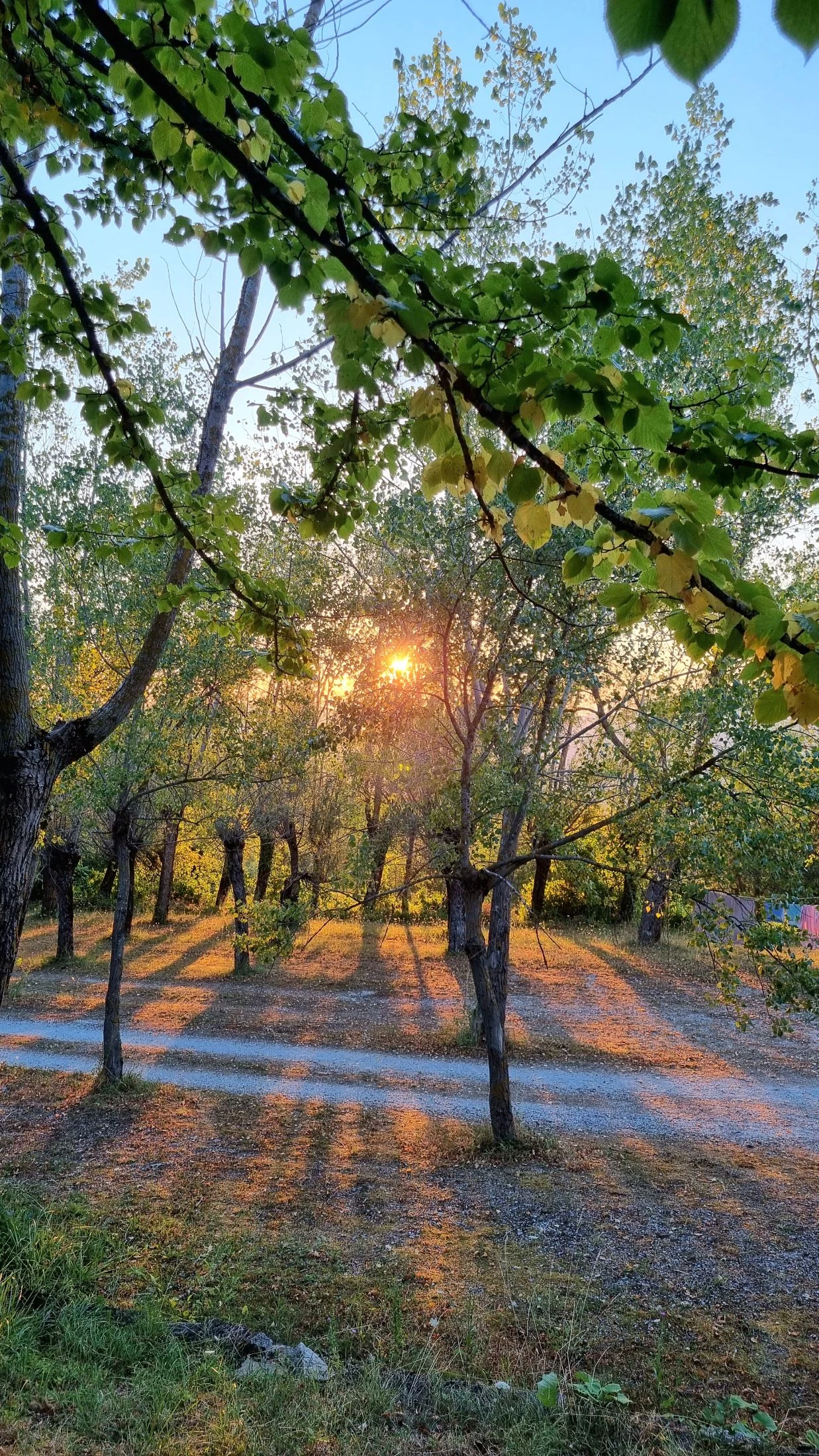 The orchard, Valmarecchia
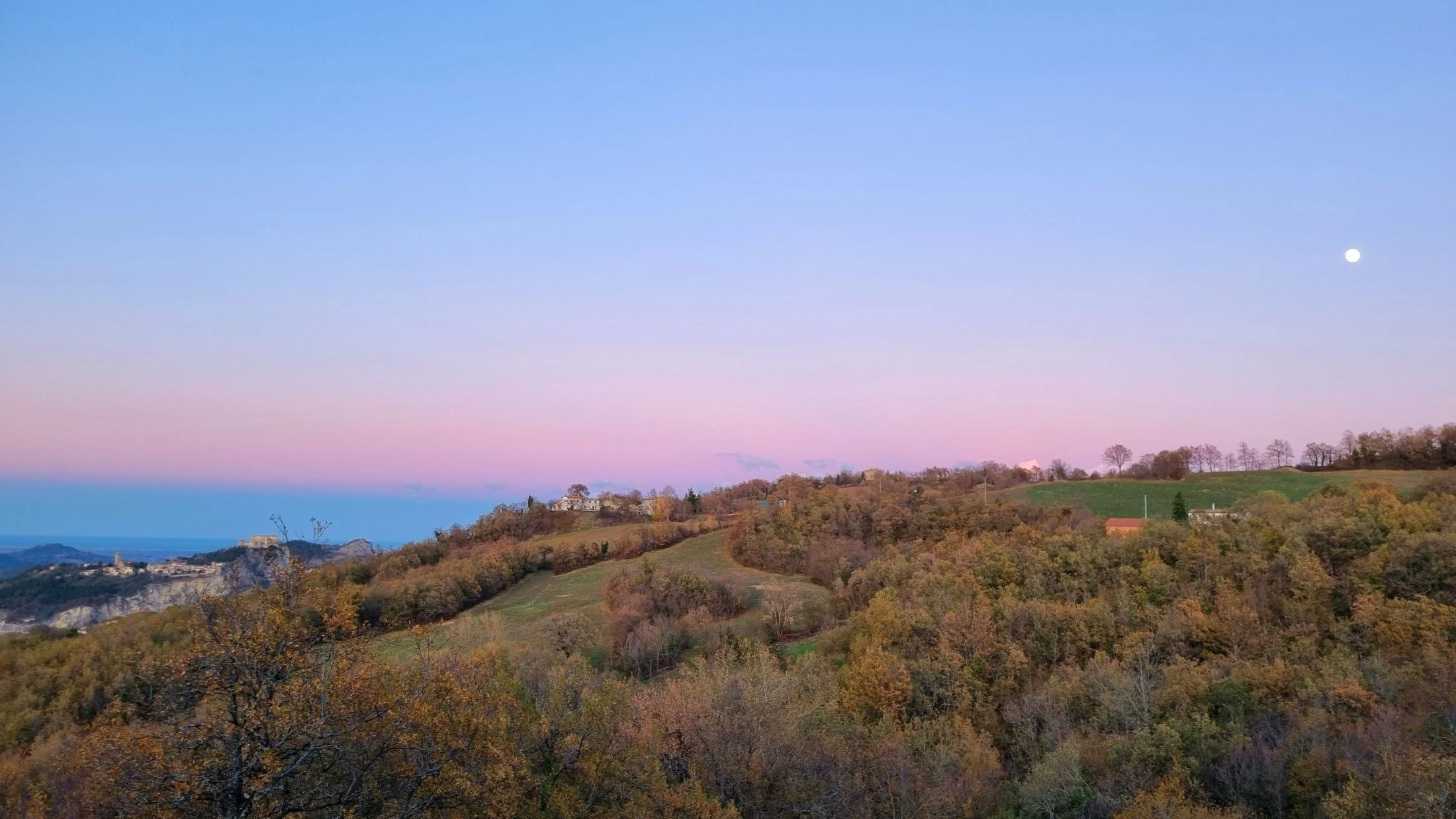
Maiolo sits in the Valmarecchia valley in the Marche region - ancient hill country, old-growth trees, clean water, and soil that has been farmed for centuries. The community works with this land rather than against it.
In Italy, we pursue a regenerative approach to agriculture known as syntropic farming: a biodiversity-friendly method that works with the land rather than against it, complementing our aim of planting diverse crops to meet the community’s various needs.
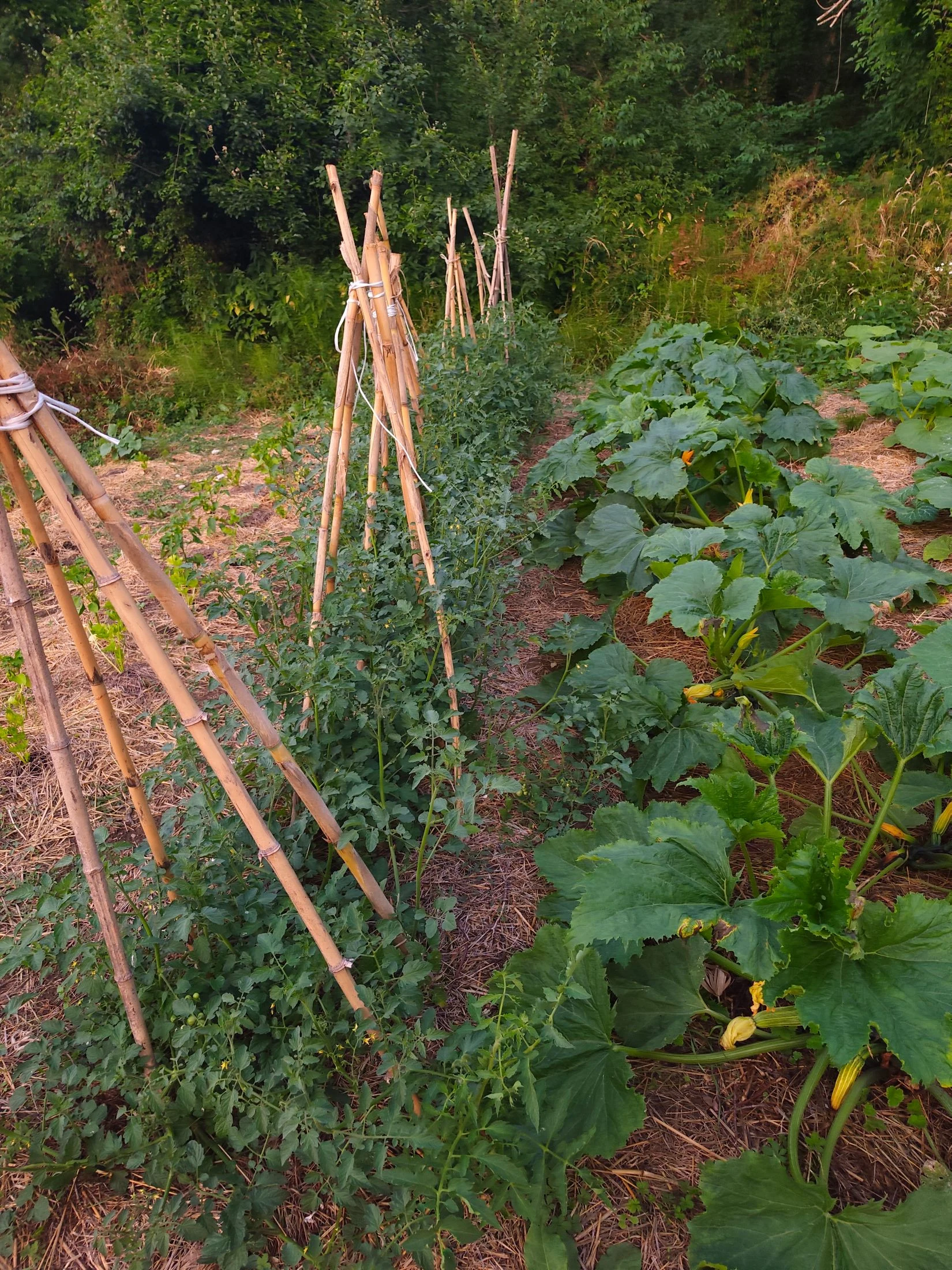 The vegetable garden
 produces food for the community’s three daily meals across the growing season. The orchard and the surrounding land are managed for biodiversity as well as yield. Nothing that comes from this soil goes to waste - what isn’t eaten is composted and returned.
Animal care is part of the community’s daily life. We host chickens and bees, and are preparing to welcome goats. The careful attention their keeping requires - feeding, housing, the rhythm of their days - is part of how Honeydew learns to be responsible for living things.
Composting and waste
Waste at Honeydew is separated carefully - compost, recycling, landfill. The compost goes back to the garden. The landfill is minimised. The aim is a closed loop: what the land gives, the community returns.
Energy and water
Mindful use of energy and water is part of the community’s daily practice. Short showers. Lights off. Natural products where possible. These habits are not policed - they are part of how the community understands its relationship to the resources it depends on.
 The apiary at Maiolo
The bees
What the hives tell us.
Honeydew keeps bees. This is not incidental - it is one of the most important ecological practices on the site.
Bees are the land’s health indicators. The condition of the hives, the range of flowers they forage from, the quality of the honey they produce - all of this reflects the ecological state of the surrounding environment. Working with bees is a form of listening to the land.
The beekeeping at Honeydew is regenerative and respectful: working with the colony’s natural rhythms, not against them. The honey harvested at Maiolo is raw and seasonal - it tastes of this specific valley, these specific flowers, this specific time of year. You cannot buy that anywhere else.
Beekeeping is also one of the six community domains - volunteers and residents work in the apiary as part of their rotation, learning from the bees what the land is doing.
Join the land work
Work with us on the land.
We seek knowledgeable farmers with passion and ambition who can help us feed our communities. If you’re interested in getting involved, write to ecology@honeydew.community.
Building
How we build.
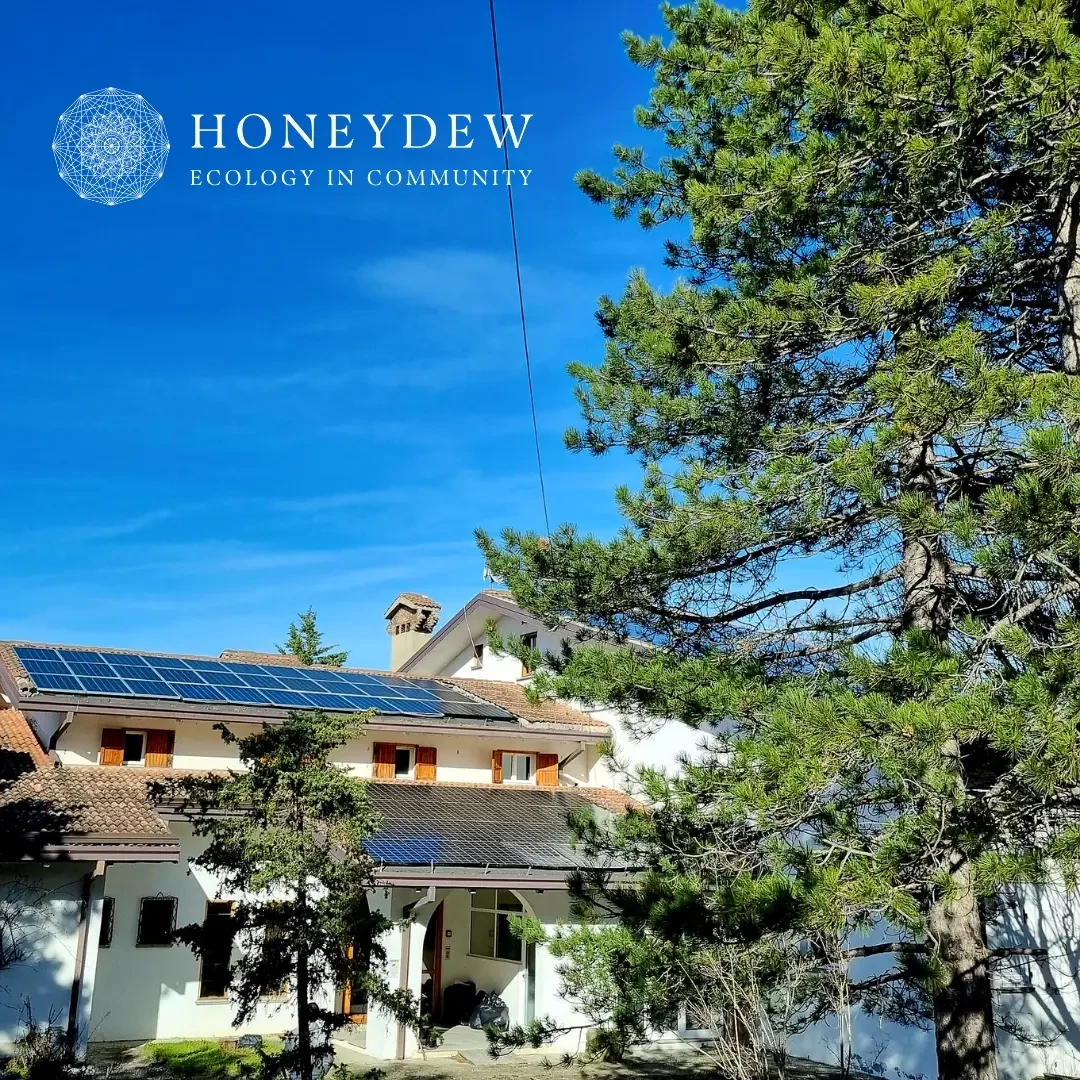
Honeydew Maiolo is a former hotel complex undergoing ongoing restoration. The construction work here is ecological in both method and intent: using traditional materials where possible, restoring rather than demolishing, building for longevity rather than speed.
Every space that is completed becomes something the community lives in. The quality of the building matters because the quality of the space shapes the quality of the life lived in it. Beauty is not decoration - it is part of the ecological vision.
The construction domain is one of the six community areas - people learn hands-on, working with Elias (the construction lead) on real projects that remain after they leave.
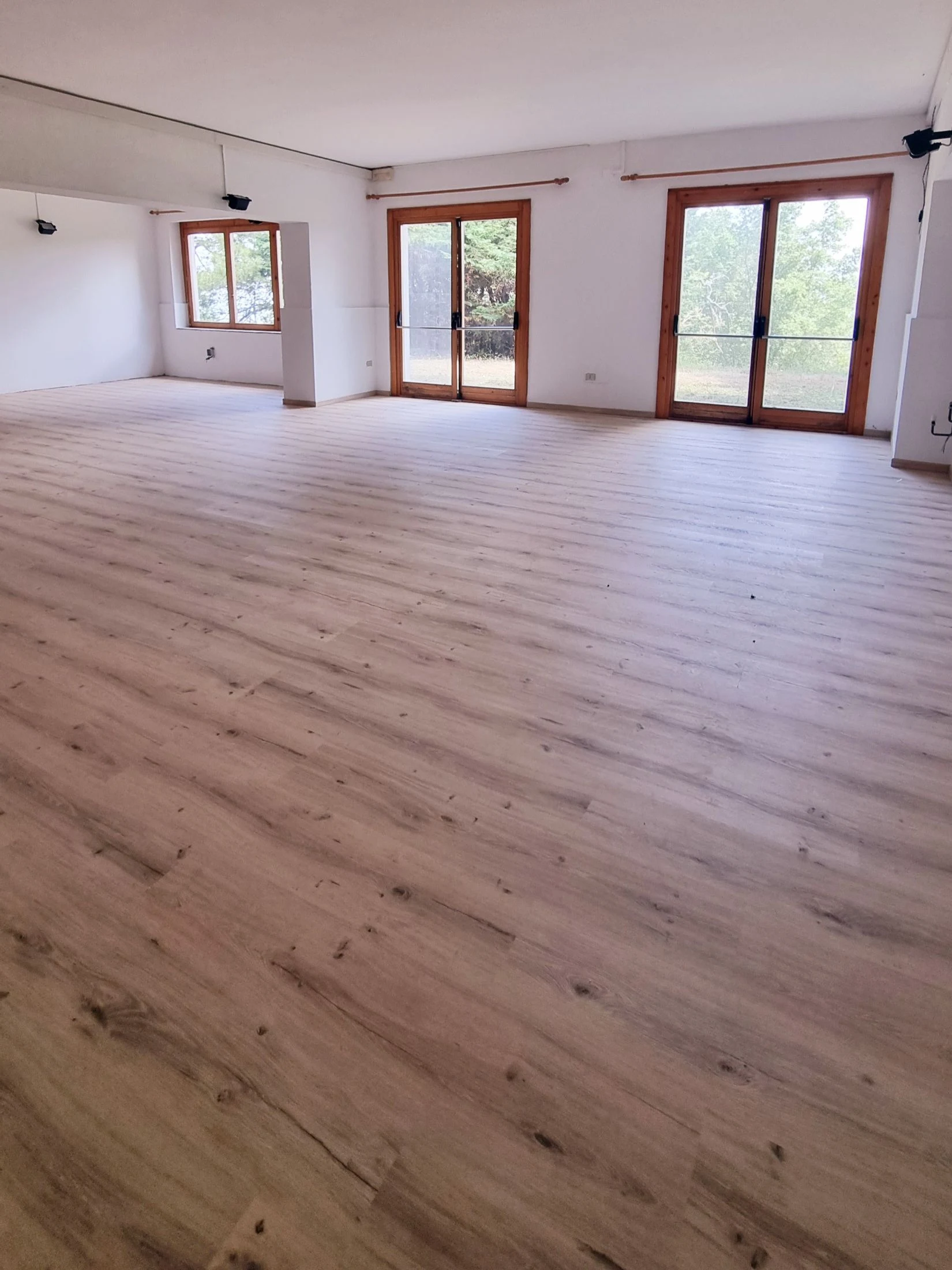 Restoration in progress
The network’s ecology
A global ecosystem.
The Honeydew network spans six countries across three continents - and each node reflects the ecology of its own place. The organic coffee comes from Espírito Santo, Brazil. The cacao from Bahia. Tropical fruits from Midigama, Sri Lanka. Wild foraged mushrooms from the Himalayas in India. Raw honey from Maiolo.
These are not marketing claims. They are the literal produce of communities that have chosen to live in close relationship with the land they inhabit. The taste of each place is in what it grows.
This is the abundance that consumerism cannot replicate: food that carries the identity of its place, made by people who know both the land and each other.