Frequently asked questions
Answers to the most common questions about Honeydew – what it is, who it's for, how to join, and what life here actually looks like.
About Honeydew
What is Honeydew?
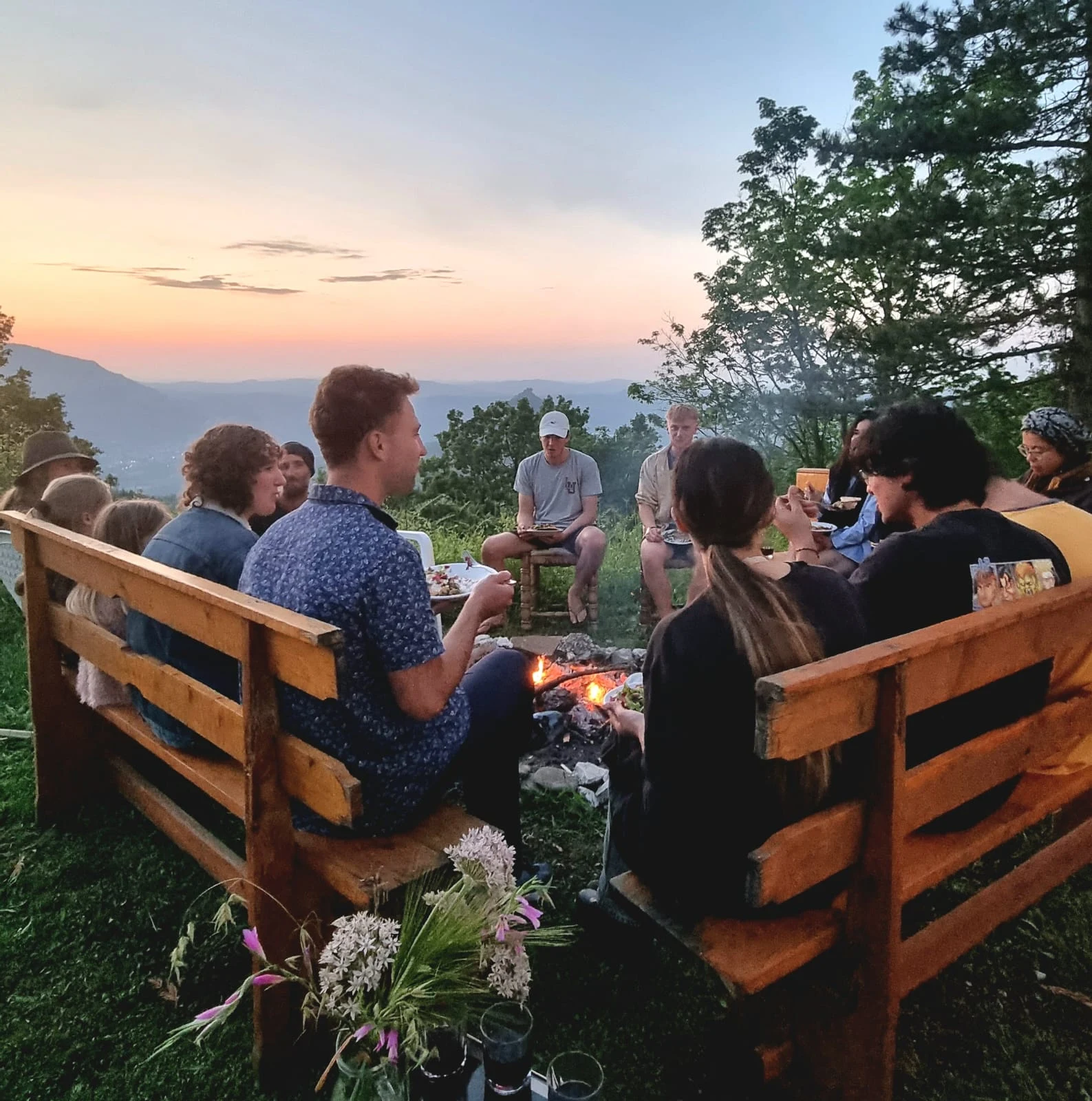
Honeydew is a global network of ecovillages. The main base is in Maiolo, Italy – a living community where people grow food, restore land, share meals, and create space together. Our Honeycomb network affiliates with projects around the world, in Brazil, India, Portugal, Sri Lanka, Colombia, and Argentina.
Is this an ecovillage?
Yes, in the sense that it is a community built around ecological principles. But Honeydew is not trying to be a village in the traditional sense – it is cosmopolitan, international, and explicitly engaged with the world, not retreating from it.
Is this a cult?
No. Honeydew has no doctrine, no authority structure that asks people to surrender their judgment, and no requirement to believe anything. The community is held together by shared values and shared work, not ideology. People come and go freely. Benjamin is the founder; he is not a spiritual leader.
Is it religious?
No. The community practices Shabbat as a weekly ritual of rest and togetherness – everyone is welcome regardless of faith or background. Our shared traditions are cultural rather than religious.
Where exactly is Maiolo?
In the Valmarecchia valley, in the Romagna region of central Italy. About 45 minutes by car from Rimini. Medieval hilltop country, clean air, wild nature. Not on the tourist trail – intentionally.
Joining the community
What are the ways to be part of Honeydew?
Four paths:
Volunteer: a three-week stay, rotating through all six community domains, finding your place, deciding what's next. The most accessible entry point.
School of Community Life: a three-month residential programme from April 2027. Deeper commitment, more structure, earns you the Honeydew Passport.
Short stay: guest rooms for overnight to month-long visits. You share meals and daily life without a formal programme.
Digital nomad: work remotely from Honeydew at our guest rate (full-time) or combine remote work with part-time volunteering at a reduced rate. Contact us for more details.
What's the difference between volunteering and the School?
Duration and depth. Volunteers come for three weeks and follow the Scout Protocol – exploring all the domains before going deep into one. School participants commit to three months, engage with a curriculum facilitated by Makers, and leave with the Honeydew Passport. The volunteer experience is also how most School applicants first encounter Honeydew.
Do I need to speak Italian?
No. Meetings are conducted in Italian and English, but Honeydew is a cosmopolitan community with many languages spoken, including Portuguese, Spanish, French, German, Hebrew, and Farsi. Optional one-hour language lessons run daily after lunch. You'll pick up Italian naturally; it is not a requirement on arrival.
What age range is Honeydew for?
The primary focus is roughly 18-35, though the community is genuinely intergenerational. What matters more than age is orientation – whether you are looking for something tangible and willing to commit to finding it.
Can families come?
Yes, family life is an important part of the project. Families can stay in private bungalows or in the larger family suites. Contact us for information about the Forest School programme.
Volunteer programme
What does a three-week volunteer stay look like?
Week 1 is rotation: one day in each of the six domains, getting a full picture of how the community functions. Week 2 is depth: going into the domains that appeal to you and starting a real project. Week 3 is decision: staying on as a long-term volunteer at the School, or potentially as a resident, or leaving as part of the alumni network. Full details on the volunteer page.
What is the sixth hour?
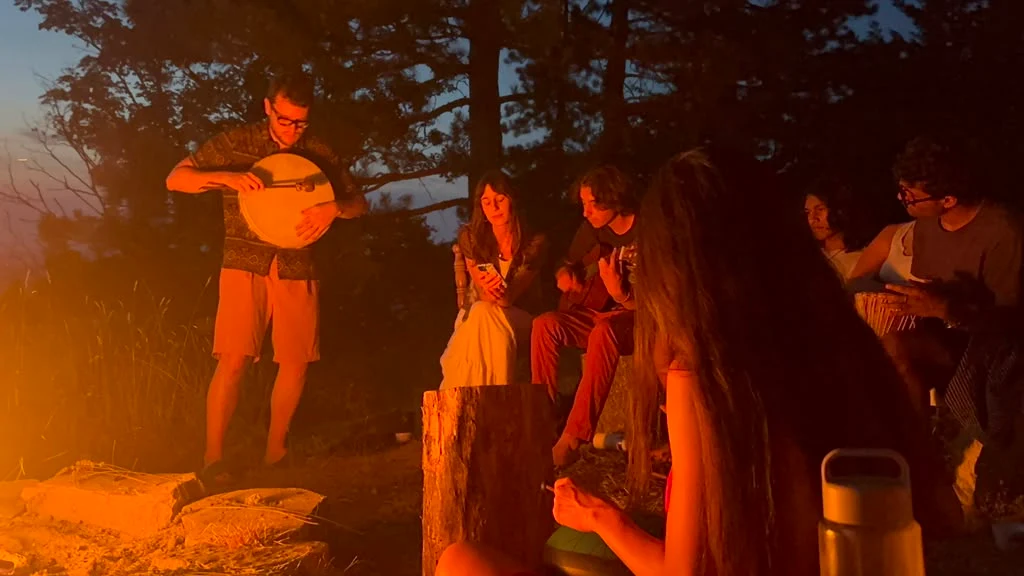
Volunteers contribute five hours of work each day. Beyond that, we have a concept called the 'sixth hour', in which we cultivate and share our own skills and creative pursuits: painting, baking, ceramics, yoga, dance, music. These activities nourish both the individual and the collective.
Is there a cost?
Yes, depending on the amount of hours worked per day. This enables us to accommodate digital nomads and those with flexible schedules. All volunteers get two days off per week (one during the week, one on the weekend, although they can be taken as a bloc on request).
Volunteering commitment:
Six hours per day: No fee
Five hours per day: €5
Four hours per day: €8
Three hours per day: €11
Two hours per day: €14
One hour per day: €17
The daily fee covers all meals, accommodation, activities, and use of facilities. Payment on arrival.
What do I actually do all day?
Work in your domain in the morning (9:00am-1:00pm), eat lunch together, optional workshops, then lighter work in the late afternoon followed by communal dinner. Two days off per week. Evenings are yours, for creative and communal pursuits.
Can I extend my stay?
Yes. A member of the Leadership Team will review your progress and assess your suitability to stay on as a long-term volunteer at the School. We typically invite volunteers to spend up to three months before confirming long-term residency.
What about visas and insurance?
Honeydew is unable to assist with visas or work permits – it is the volunteer's responsibility to ensure they have the legal right to remain in Italy. Site work insurance is also the responsibility of the volunteer.
School of Community Life
When does the School launch?
The next cohort starts on 5 April 2027. You can apply at /school and we will contact you to arrange an interview.
How long is the School?
Three months, residential.
What do you learn?
The curriculum covers regenerative agriculture, community governance, creative practice, ecological building, conflict resolution, and more. The community is the curriculum, facilitated by resident experts who teach through doing.
What does completing the School earn you?
The Honeydew Passport, a symbol of recognition in the global Honeycomb network. It gives you priority access to all affiliated communities worldwide.
What does it cost?
€10 per day. This covers accommodation, meals, and facilitation, as well as participation in all activities and workshops. A select number of scholarships are available for those unable to pay.
 Honeydew Maiolo
Practical volunteer questions
Are there specific skills you're looking for?
We welcome energetic, skilled people of all ages and backgrounds. We are particularly interested in those with experience in agriculture, carpentry, plumbing, tree surgery, social media, and fundraising.
Is there a dietary requirement to join?
No. Honeydew is a conscious but fairly omnivorous community. We cook a range of dishes – some vegan or vegetarian, some containing animal products.
Are children welcome?
Yes, we warmly welcome families with children of all ages. We have run Forest School summer camps for kids aged 3-6 and 7-12.
Staying as a guest
Can I just come and stay without volunteering or joining the School?
Yes. Guest rooms are available for short stays – from a night to a month. You share communal meals and have access to the grounds and common spaces, as well as participation in all group activities and workshops.
Is it like a hotel?
Not really. You have a private room, but you eat with the community and move through a living place, not a hospitality operation. It is warmer and more interesting than a hotel, and less formal too. Most guests find they want to participate more than they expected to.
Do I have to do anything?
No. There's no obligation to join the work or participate in communal activities. The invitation is always open, but it's never required.
Practical
What should I bring?
Practical clothing suitable for outdoor work. Sensible footwear, plus warm layers for spring and autumn evenings. Personal toiletries. EU power adaptor if needed. Cash in euros for small purchases locally.
Is there Wi-Fi?
Yes. Starlink provides a strong connection around the property.
How do I get there?
Train or flight to Rimini, then bus to Novafeltria (approx. 1 hour), from where we can collect you.
Taxi from Rimini is about 45 minutes.
Who do I contact?
Use the contact page – enquiries are routed to a member of the Leadership Team.
How Honeydew sustains itself
How does the community sustain itself financially?
Honeydew is financially self-sustaining through a programme of private events, retreats, and guest stays. We are also sustained by donations and are open to discussing sponsorship. All earnings go back into supporting the community, which operates as a non-profit Cultural Association. Ongoing investment in the renovation of the Maiolo property is made personally by our founder, Benjamin Ramm.
Can I donate?
Yes – donations are welcome and go directly toward the community and its ongoing development. Donate here →